
Bathroom Countertop Materials Compared: Ceramic vs. Glass vs. Solid Surface vs. HPL


Alice Ceramica Lunaris Ceramic 
Baden Haus Olimpia Glass 
Baden Haus Roma Solid Surface 
Baden Haus Roma HPL
Countertop material comparison. Ceramic vs glass vs solid surface vs HPL. Bathroom countertop maintenance. Non-porous countertop hygiene. Luxury bathroom countertops.
The Decision That Outlasts the Renovation
A luxury bathroom is designed to be lived in, not simply admired on the day the renovation is complete.
The tile may be selected for its distinctive veining. The vanity is chosen for its craftsmanship and functionality. The countertop for the way it matches the other materials, faucet, decorative hardware or overall color palette. There’s another consideration that deserves equal attention: What will my countertop look like in 5 years.
What rarely gets discussed at the point of purchase is what that same countertop will look like after five years of toothpaste, hard water, cleaning products, and daily use. That's a mistake, because a bathroom countertop is one of the most heavily used surfaces in the home. It's touched multiple times a day, exposed to moisture almost constantly, and subjected to a rotating cast of skincare products, styling tools, and cleaning chemicals.
Material behavior, not just material appearance, is what determines whether a countertop still looks premium in year five.
This guide compares four of the most common countertop options: ceramic, glass, solid surface, and HPL (high pressure laminate). We’ve put together a comparison guide to help you understand what countertop is right for you and your home.
We examined how each one behaves with daily use, how it should be cleaned, what maintenance it requires, and where its hygiene profile shines or falls short.
Along the way, we'll reference current Pontem Home collections, including the Alice Spy and Berloni Smooth and Quadra ceramic countertops, to Baden Haus Portofino solid surface and Roma HPL, to the Baden Haus Olimpia and Berloni Bagno glass basins.
Why Material Behavior Matters More Than Material Trend
Every few years, countertop materials moves in and out of fashion. Right now, matte ceramic and warm-toned glass finishes are having a moment. A decade ago, high-gloss lacquer and cool white composites dominated showrooms.
Trends fade. Behavior doesn't.
A countertop that etches under an acidic skincare product, clouds under hard water, or scratches from a dropped ring will look dated within a year or two, regardless of how on-trend the finish was when it was installed. This is why designers increasingly evaluate countertop material the same way they evaluate a mattress or a pair of shoes: not by how it looks in the showroom, but by how it performs after real, repeated use.
Four questions tend to separate a countertop that ages well from one that doesn't:
How porous is the surface, and what does that mean for staining and bacteria?
How does it respond to daily cleaning products, not just water and a cloth?
Does normal wear (scratches, impacts, heat) show immediately or is the material forgiving?
What does restoring or repairing it actually involve if something goes wrong?
With those questions in mind, here's how ceramic, glass, solid surface, and HPL compare.
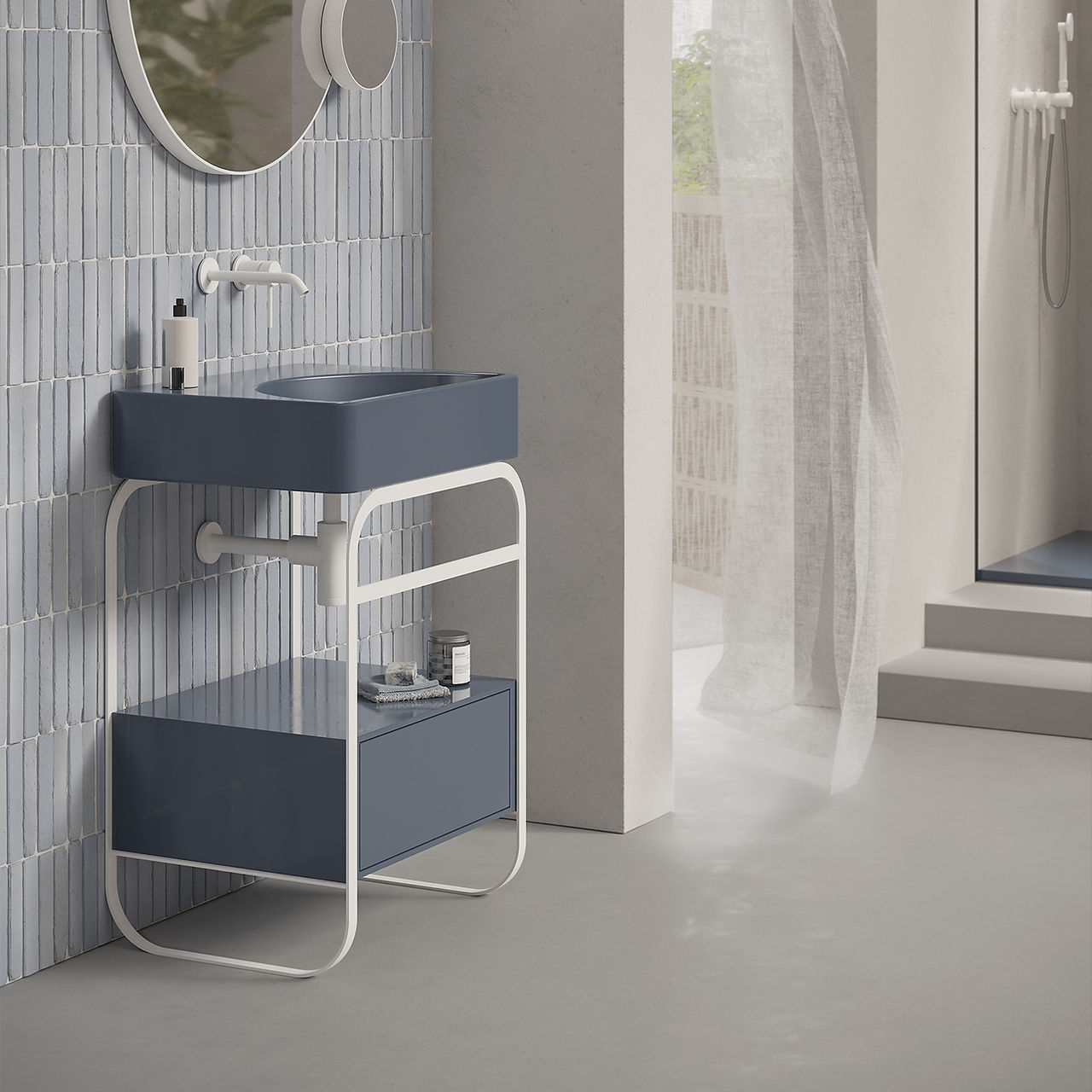
Alice Lunaris Ceramic Countertop 
Alice Ceramica Spy Countertop 
Berloni Bagno Suite Vintage Countertop
Ceramic Countertops
What It Is
Ceramic countertops are fired clay-based surfaces, typically finished with a glaze that seals the material and gives it its color and sheen. In bathrooms, ceramic is most often seen as an integrated countertop-and-washbasin unit, where the counter and sink are a single fired piece.
Pontem Home’s Spy collection offers 15 beautiful ceramic finishes from high gloss and matte neutrals to colors like green, blue, pink and yellow. Berloni's Quadra and Smooth collectiosn offers a similar integrated approach. Available across a range of 7 matte and gloss neutral ceramic finishes.
Cleaning
Glazed ceramic is one of the easiest bathroom surfaces to keep looking new. A damp microfiber cloth and a mild, non-abrasive cleaner handle daily grime without effort. Because the glaze seals the surface, most everyday products, soap residue, toothpaste, hard water spots, wipe away without leaving a film behind.
Avoid abrasive powders or scouring pads. They won't damage the ceramic body itself, but they can dull the glaze's sheen over time, which is where most of the material's premium look comes from.
Maintenance
Ceramic requires essentially no ongoing maintenance beyond regular cleaning. There's no sealing, no reconditioning, no periodic treatment. This is part of why it remains a default choice for busy households: it's a genuinely low-maintenance material, not just a marketed one.
The main vulnerability is impact, not wear. A glazed ceramic surface can chip if struck hard enough by something dense (a dropped bottle of perfume, a heavy fixture), and a chip exposes the unglazed body underneath. It's uncommon in normal use, but worth knowing before specifying ceramic.
Hygiene
This is where ceramic performs strongly. A properly fired and glazed ceramic surface is non-porous, meaning liquids, oils, and bacteria have nowhere to penetrate. Several Alice Ceramica collections also use an antibacterial glaze finish, which adds a further layer of protection by inhibiting bacterial growth directly on the glaze surface, on top of the hygienic advantage the non-porous material already provides.
For clients specifically prioritizing hygiene, glazed ceramic is one of the strongest options in this comparison.

Baden Haus Olimpia Glass Countertop 
Baden Haus Olimpia Glass Countertop 
Baden Haus Olimpia Glass Countertop
Glass Countertops
What It Is
Glass countertops are typically tempered for strength and used as an integrated glass washbasin, where the counter and basin are shaped from a single sheet. Baden Haus's Olimpia collection offers this format, with a glass basin available in extra-light white or satin black, alongside the line's resin and ceramic basin options. Berloni Bagno offers the Botte Collection glass basin, available in 100 glass finishes – 50 gloss options and 50 matte options.
Cleaning
Glass is unforgiving of streaks, which makes it the most visually demanding material to keep looking pristine, but also one of the simplest to actually clean. A standard glass cleaner and a lint-free cloth handle it. The nature of glass means dirt and residue sit on the surface rather than working into it, so a quick wipe-down genuinely resets the surface each time.
The catch is water spotting. Because glass shows every mineral deposit from hard water, bathrooms in hard-water regions need more frequent drying after use to keep the surface looking pristine.
Maintenance
Glass doesn't require sealing or reconditioning, but it does require more careful handling than the other three materials here. It's more susceptible to chipping at the edges from impact, and unlike solid surface, a chip or crack in glass generally can't be sanded out or repaired. It needs to be replaced.
For clients who want a showpiece surface and are comfortable with a bit more care in exchange for it, glass delivers a look no other material quite matches. For a high-traffic family bathroom, it's worth setting expectations accordingly.
Hygiene
Like ceramic, glass is fully non-porous. There's no substrate for bacteria or moisture to penetrate, and no risk of staining from oils or pigmented products. Its hygiene profile is excellent, provided the surface is kept dry between uses so water doesn't sit and evaporate into a mineral film.

Baden Haus Portofino Solid Surface 
Baden Haus Roma Solid Surface 
Baden Haus Portofino Solid Surface
Solid Surface Countertops
What It Is
Solid surface is an engineered material, typically a resin or acrylic-based composite, that's manufactured in slabs or molded into integrated countertop-and-basin shapes. It's designed to mimic the visual softness of natural stone while offering more consistency and, in most cases, easier repairability.
Baden Haus's Portofino collection offers a solid surface countertop option in a matte white finish, with an integrated drain cover, giving the vanity top a seamless, jointless look across the whole surface.
Cleaning
Solid surface is genuinely low-effort to clean day to day. Warm water, mild soap, and a soft cloth are usually enough. Because the material is consistent all the way through rather than just coated on the surface, it tolerates slightly more cleaning latitude than a glazed or coated material would.
Maintenance
This is solid surface's standout advantage: it's repairable. Because the color and material run consistently through the full thickness rather than sitting as a surface layer, light scratches and even some heat marks can be sanded and buffed out, often without a visible trace. This is a meaningfully different maintenance proposition than ceramic or glass, where surface damage generally means living with it or replacing the piece.
That repairability comes with one caveat: solid surface is softer than ceramic or glass, so it's more prone to scratching from abrasive cleaning pads or sharp objects in the first place. The tradeoff is that when damage does happen, it's fixable rather than permanent.
Hygiene
Solid surface is non-porous when properly manufactured, which gives it a hygiene profile in line with ceramic and glass: resistant to moisture penetration, staining, and bacterial buildup under normal use. Its seamless, jointless construction, particularly in integrated countertop-and-basin designs like Portofino’s, also removes the seams where grime typically accumulates around a drop-in sink.

Baden Haus Roma HPL Countertop 
Baden Haus Roma HPL Countertop 
Baden Haus Roma HPL Countertop
HPL Countertops
What It Is
High Pressure Laminate (HPL) is a layered material made by bonding resin-saturated paper or fiber sheets under intense heat and pressure, topped with a decorative and protective wear layer. It's the same core material technology used in exterior architectural cladding, which is a large part of why it performs the way it does on a bathroom countertop.
Baden Haus's Roma collection is Pontem's HPL countertop line, offered in a quartz-effect finish (light or dark), built for clients who want the clean, modern look of a premium surface without the weight or cost profile of natural stone.
Cleaning
HPL is arguably the easiest of the four materials to maintain day to day. Its wear layer resists staining and doesn't require any specialized cleaner, a damp cloth with mild soap is enough for routine cleaning. Because it's non-porous, everyday spills, from toothpaste to skincare oils, sit on the surface rather than soaking in, so they wipe away cleanly if addressed within a reasonable timeframe.
Maintenance
This is where HPL's exterior-grade heritage shows. The same pressure-laminated construction developed to withstand years of sun, rain, and temperature swings on a building facade translates into a bathroom countertop that shrugs off daily scratches, impacts, and general wear far better than its price point would suggest. It doesn't require sealing, resealing, or periodic treatment.
Because HPL is also significantly lighter than stone or solid surface, it places less structural load on cabinetry, which simplifies both installation and long-term wear on the vanity base itself.
Hygiene
HPL's non-porous wear layer resists moisture absorption and bacterial buildup in the same way glazed ceramic and glass do, without the fragility of glass or the impact sensitivity of ceramic. For clients weighing hygiene, durability, and budget together, particularly in busy family bathrooms, this combination is where HPL tends to win the conversation.
Countertop Materials at a Glance

Ceramic (Alice Spy, Berloni Quadra and Smooth): Non-porous and highly hygienic, easy daily cleaning, no sealing required. Vulnerable to chipping from hard impacts; chips aren't repairable. Best for clients prioritizing hygiene and a polished, integrated look.

Glass (Baden Haus Olimpia and Berloni Bagno Botte): Non-porous with an excellent hygiene profile, wipes clean easily. Shows water spots readily and needs regular drying; chips and cracks require replacement, not repair. Best for a showpiece look in lower-traffic or primary ensuite bathrooms.

Solid Surface (Baden Haus Portofino):
Non-porous, seamless construction, and the only material here that's genuinely repairable if scratched or heat-marked. Softer surface, so more prone to scratching in the first place. Best for households that want long-term flexibility and forgiveness built into the material.

HPL (Baden Haus Roma):
Non-porous, highly impact- and scratch-resistant thanks to its architectural exterior-grade construction, lightweight, and low-maintenance. Not repairable if deeply gouged, though this is uncommon given its durability. Best for busy family bathrooms and clients who want stone-like sophistication without stone's weight, cost, or upkeep.
Five Considerations Before Specifying a Countertop Material
Match the Material to the Household, Not Just the Design
A primary ensuite used by one or two adults can support a more delicate material like glass. A shared family bathroom, or a powder room fielding constant guest traffic, generally does better with ceramic or HPL, materials that forgive daily wear without demanding extra care.
Factor In Repairability, Not Just Initial Durability
Every material will eventually show some sign of use. The real question is what happens next. Solid surface can be sanded and restored. Ceramic, glass, and HPL generally can't be repaired at the surface level, so damage means living with it or replacing the piece. That's not a reason to avoid those materials, it's a reason to be realistic about which rooms they go in.
Understand What "Non-Porous" Actually Buys You
All four materials in this comparison are non-porous when properly manufactured, which is why they all perform well on hygiene. The differentiator between them isn't whether bacteria can penetrate the surface, none of them allow that, it's how each one handles the moisture, cleaning products, and impact that come with daily use.
Weight Affects More Than Just Installation
HPL's lightweight profile compared to stone or solid surface isn't just a shipping or installation convenience. It reduces the structural load on the vanity cabinetry over time, which matters in renovations where the existing cabinet base isn't being replaced.
Hygiene Claims Deserve a Closer Look
"Hygienic" gets used loosely in countertop marketing. The meaningful version of that claim is non-porous construction, sometimes paired with an antibacterial glaze or wear layer, not a vague appeal to cleanliness. When a client asks about hygiene specifically, that's the distinction worth walking them through.
Frequently Asked Questions About Countertop Materials
Which bathroom countertop material is easiest to clean?
HPL and ceramic are generally the lowest-effort materials day-to-day. Both have non-porous, sealed surfaces that wipe clean with mild soap and water, and neither requires specialized cleaning products or periodic sealing. Glass is equally easy to wipe down but shows water spots more readily, so it needs more frequent drying to look consistently clean.
Which countertop material is most hygienic?
Ceramic, glass, solid surface, and HPL are all non-porous when properly manufactured, which means none of them allow moisture or bacteria to penetrate the surface under normal conditions. Some ceramic lines, including several from Alice Ceramica, add an antibacterial glaze on top of that non-porous base for an additional layer of protection. For clients prioritizing hygiene above all else, glazed ceramic with an antibacterial finish is typically the strongest single option.
Is HPL waterproof?
HPL's wear layer is highly water-resistant and non-porous, which is why it performs well in bathroom applications and why the same material technology is used in exterior cladding exposed to weather. Like any countertop material, standing water left indefinitely at a seam or edge should still be wiped up, but everyday moisture exposure is well within what HPL is built to handle.
Can a scratched solid surface countertop be repaired?
Yes, this is one of solid surface's defining advantages. Because the material is consistent through its full thickness rather than coated on top, light scratches and some heat marks can typically be sanded and buffed out without a visible trace. This is generally not possible with ceramic, glass, or HPL, where surface damage is largely permanent.
What happens if a glass countertop chips or cracks?
Unlike solid surface, glass can't be sanded or patched. A chip or crack in a glass countertop or integrated glass washbasin typically means replacement rather than repair. This is worth factoring in for higher-traffic bathrooms, where glass may be better suited to a secondary surface or a lower-impact area rather than the primary daily-use zone.
Is ceramic countertop material heavy?
Ceramic sits in the middle of the weight range, heavier than HPL but generally lighter than natural stone. Because ceramic countertops in bathroom applications are usually integrated with the washbasin as a single fired piece, weight is typically factored into the vanity and cabinetry specification from the start rather than treated as an afterthought.
Which countertop material is best for a busy family bathroom?
HPL and ceramic tend to be the strongest fits for high-traffic, multi-user bathrooms. Both resist daily wear well, require minimal maintenance, and hold up to the kind of repeated impact and cleaning-product exposure that a family bathroom sees. Solid surface is also a strong option given its repairability, particularly in households with young children where scuffs and impacts are more likely.
Final Thoughts: The Material Is the Maintenance Plan
Choosing a countertop material is, in practice, choosing a maintenance routine and a hygiene standard for years to come, whether or not that's how the decision gets framed in the showroom.
Ceramic and glass offer a polished, non-porous surface with minimal daily effort, at the cost of being unforgiving if something chips or cracks. Solid surface trades a bit of that hardness for genuine repairability. HPL brings exterior-grade durability and a lightweight installation profile to a price point and maintenance routine that busy households consistently favor.
None of these materials is universally correct. The right one depends on who's using the bathroom, how it's used, and how much tolerance the household has for either extra care or eventual replacement over eventual repair.
At Pontem Home, we work across all four material categories, from Alice Spy and Berloni Smooth and Quadra ceramic countertops, to Baden Haus Portofino solid surface and Roma HPL, to the Baden Haus Olimpia and Berloni Bagno glass basins. We believe the right material is the one that suits how a bathroom is actually used—not simply how it looks on day one.
Discover more at shop.pontemhome.com.

Alice Ceramica Kubo 
Berloni Bagno Xilo Quadra Ceramic Countertop 
Baden Haus Portofino 
Baden Haus Vague Glass Sting Washbasin Matte Black 
Baden Haus Roma Countertop HPL Dark Quartz 
Alice Lunaris Ceramic Countertop


Comments