
Faucet and Accessory Finishes: PVD, Powder-Coated, and Living Finishes Explained

A specifier's guide to bathroom finish types. How PVD, powder coating, and living finishes are made, how each behaves over time, and how to choose between them.

Decor Walther DW VISION R 5X Cosmetic mirror illuminated - Copper Matte PVD 
JEE-O Slimline Collection - Bronze 
JEE-O Slimline Collection - Brushed 
Decor Walther Mikado Collection - Black Chrome 
JEE-O Slimline Collection - Matte Gold & Bronze 
JEE-O Soho Basin Faucet Wall Mounted - Stainless Steel Brushed
PVD is a vacuum-deposited metallic layer that holds its color and resists everyday wear. Powder coating is a dry polymer film applied electrostatically and cured with heat, which produces texture and color depth. A living finish is left unsealed on purpose so it develops a patina through use.
PVD suits high-touch bathrooms and outdoor applications, powder coating suits texture-led applications, and living finishes suit interiors where change over time is part of the design intent.
Faucet finish is sometimes the last decision in a bathroom specification and the first thing anyone notices. It sets the temperature of the room, ties the vanity to the mirror to the accessories, and determines how the space reads after a few years of daily use. The three finish families below behave in genuinely different ways, and the difference is worth understanding before a specification schedule goes out for approval.
What Is a PVD Finish?
PVD stands for Physical Vapor Deposition. The component is placed in a vacuum chamber, a source metal is vaporized, and the vapor condenses onto the surface as an extremely thin metallic layer that bonds at a molecular level. The color comes from the deposited metal itself rather than from a pigment sitting on top.
Two characteristics follow from that:
Hardness. The deposited layer is a hard ceramic-metallic compound, which is why PVD is widely used on tooling and watch cases as well as bathroom fittings.
Color stability. Because the color is metallic rather than pigmented, PVD tones hold their appearance through repeated contact and cleaning.
This makes PVD a natural fit for the surfaces people touch constantly: tap levers, towel bars, soap dispensers, toilet roll holders, and the frames of mirrored cabinets. It’s also an excellent finish selection for exterior applications like faucets and outdoor showers.
PVD in the Pontem Home Range
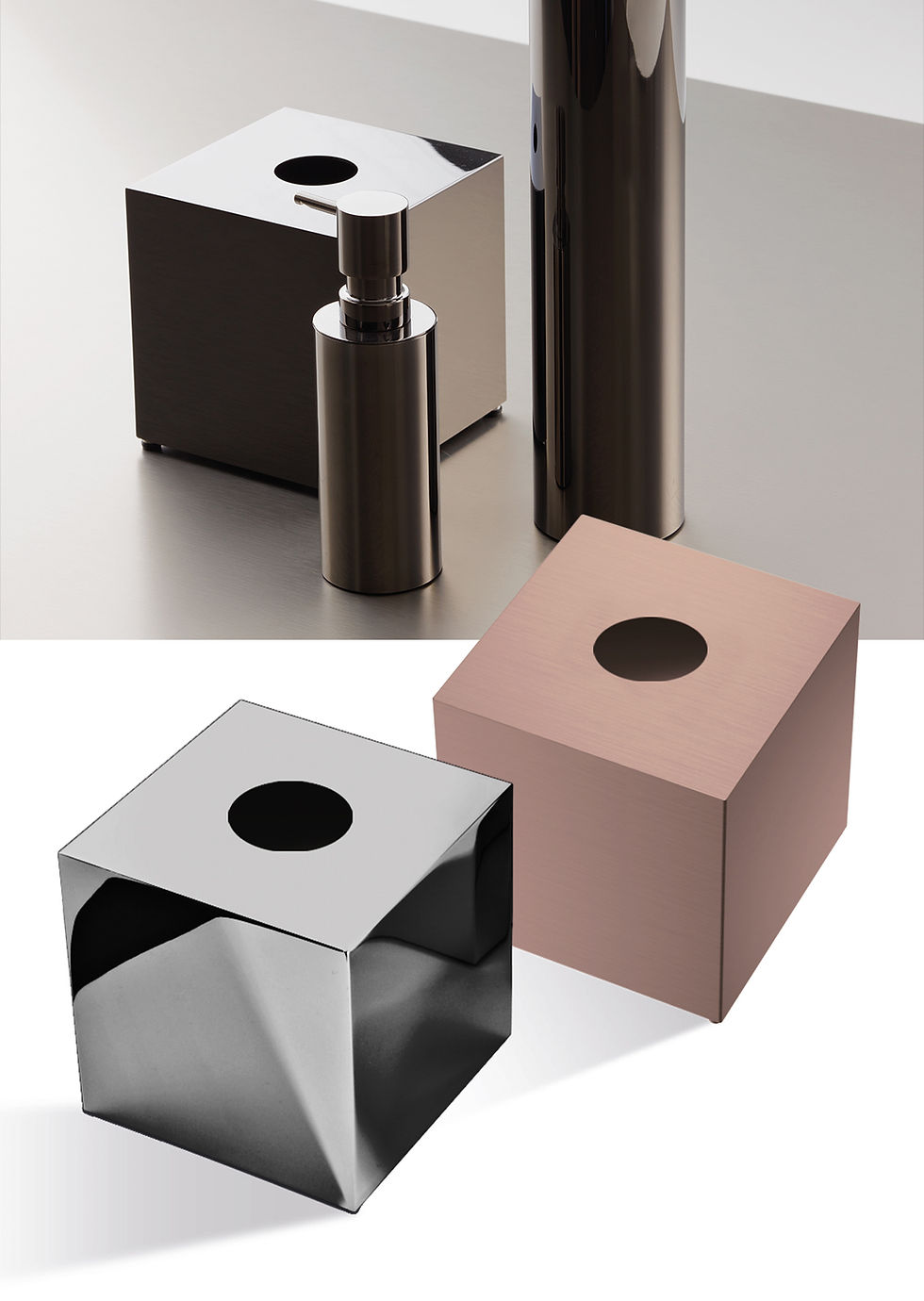
Decor Walther applies PVD across its accessory families in tones including Black Chrome, Dark Metal Matte, and Copper Matte, over a corrosion-resistant solid brass and stainless-steel base.


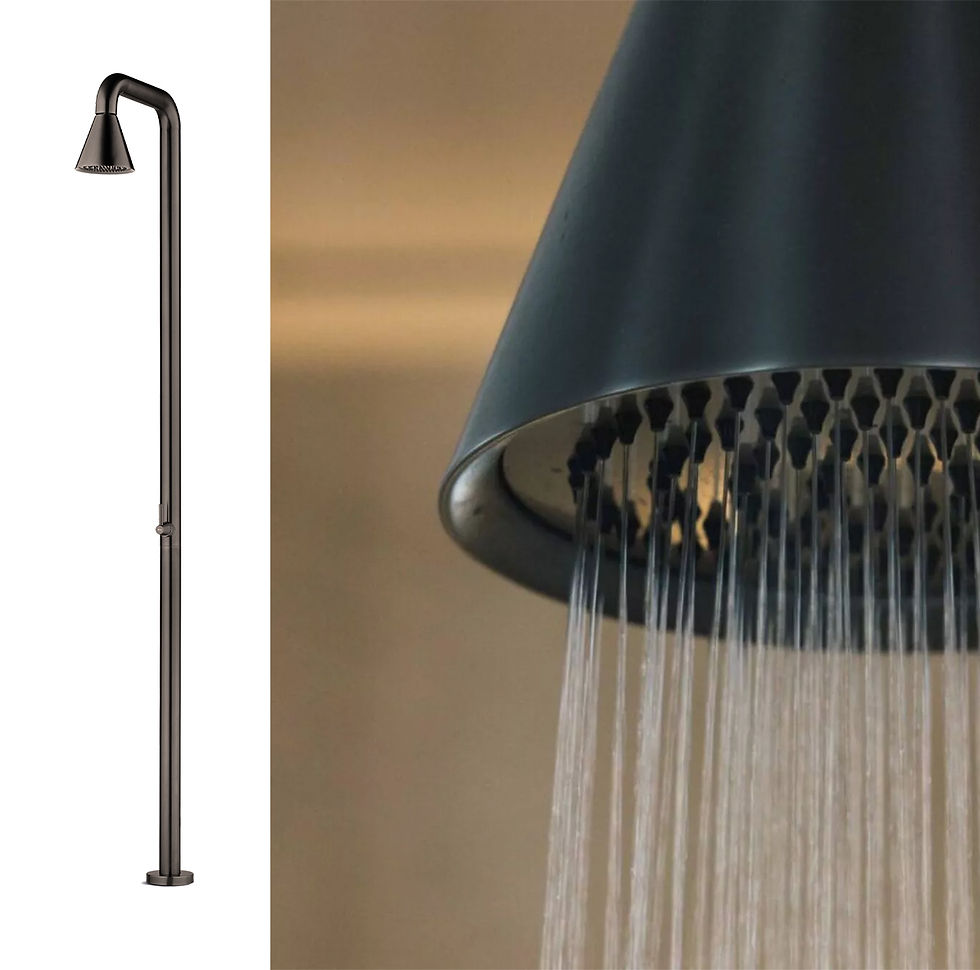
JEE-O applies PVD to stainless steel for its Gun Metal finish, used across sculptural freestanding indoor and outdoor showers:

A point worth noting for anyone drawn to warm metals: Copper Matte PVD delivers a copper tone that stays where it was specified. For designers who want the warmth of copper across a full accessory suite without variation between pieces, that stability is the whole appeal.
What Is a Powder-Coated Finish?
Powder coating applies a dry, free-flowing polymer powder to the component electrostatically, then cures it with heat so it flows into a continuous film. Unlike liquid paint, no solvent evaporates during the process. The result is a thicker film than PVD, and it can carry texture as well as color.
That thickness is the defining quality. Powder coating can produce a deep matte, a fine grain, or a pronounced structured surface that reads as much through touch as through sight. It is also the reason powder coating is so widely used on architectural metalwork and exterior products.
Applied Coating Finishes in the Pontem Home Range
JEE-O's Structured Black, Hammercoated Black, is the clearest example of a textured applied coating in the collection. It gives stainless steel a matte, tactile surface with visible depth, which suits the brand's sculptural silhouettes and reads particularly well in outdoor and poolside settings.


JEE-O also offers Dark Steel across the Slimline series, a quieter alternative to Structured Black for interiors that want depth without pronounced texture:


One specification note for textured coatings: the same texture that gives the surface its depth also gives it more surface area, so a soft cloth reaches into it more effectively than a hurried wipe. That is a cleaning habit rather than a constraint, and it applies equally to architectural metalwork in the same finish family.
What Is a Living Finish?
A living finish is metal that has been polished, brushed, or chemically patinated and then left without a protective clear layer. Unlacquered brass, raw bronze, and untreated copper all sit in this category. Because the surface is open to air, water, and skin oils, it continues to change: the tone deepens, and areas of frequent contact stay brighter than areas that are rarely touched.
That variation is the design intent. Over a few years, a lever handle in unlacquered brass becomes a record of how the room is used. Two identical taps in two different houses will look different, and neither is incorrect.
Living finishes ask for a specific conversation with the client:
The change is continuous, not a phase. The surface keeps evolving rather than settling into a final state.
The pattern follows use. Contact points brighten, recessed areas darken, and the result is uneven by nature.
Client alignment matters more than product selection. A homeowner who loves the idea of patina and a homeowner who expects day-one uniformity will react to the same tap very differently.
For that reason, living finishes tend to appear in single-owner residential projects, heritage renovations, and hospitality concepts built around character. They are specified less often in multi-unit and commercial work, where consistency across many rooms is usually the governing requirement.
Where the Pontem Home Roster Sits
The Pontem Home collection is built around PVD, powder-coated and unique materials and finishes such as glass, rattan and leather as an example rather than living ones. Decor Walther, JEE-O, and Sidler all deliver their warm and dark tones through PVD or applied coatings, which means a Copper Matte or Gun Metal specified today will read the same across every piece in the suite and stay that way.
Reach the team at sales@pontemhome.com, or browse the full finish options on shop.pontemhome.com.
PVD vs Powder Coating vs Living Finishes: Comparison
| PVD | Powder coating | Living finish |
How it is applied | Metal vapor deposited in a vacuum chamber | Dry polymer powder applied electrostatically, cured with heat | Polished, brushed, or chemically patinated, then left unsealed |
Film thickness | Very thin, measured in microns | Thicker, film-forming | None; the surface is the metal itself |
Where the color comes from | The deposited metal | Pigmented polymer | The base metal and its patina |
Texture range | Follows the substrate: polished, brushed, matte | Smooth through to pronounced texture | Follows the base metal and polishing method |
Appearance over time | Holds its specified color | Holds its specified color and texture | Deepens and varies with use |
Consistency across a suite | High | High | Varies piece by piece |
Best suited to | High-touch fittings, shared and hospitality bathrooms, multi-unit consistency | Textured and matte design languages, exterior and poolside settings | Character-led single-residence and heritage interiors |
In the Pontem collection | Decor Walther Black Chrome, Dark Metal Matte, Copper Matte; JEE-O Gun Metal | JEE-O Structured Black, Dark Steel | Decor Walther Nickel Polished |
How to Choose a Finish for a Specification
Four questions resolve most finish decisions.
1. How many rooms need to match? One bathroom allows for variation. Six matching bathrooms in a multi-unit project, or a hospitality floor plate, benefit from a coated finish that arrives the same every time and can be reordered later with confidence.
2. Who maintains the room? An owner-occupier who enjoys the ritual of polishing brass is a different user from a housekeeping team working to a schedule. Coated finishes accommodate a standardized cleaning routine.
3. Is any of it going outside? Poolside, terrace, and outdoor shower applications reward finishes built for exposure. JEE-O works in stainless steel across its outdoor-capable pieces, which is the substrate decision that matters most before finish is even considered.
4. What is the room saying? Structured Black leans bold and sculptural. Copper Matte and Gun Metal lean warm and quiet. Black Chrome leans crisp and architectural. The finish is a tone of voice, and it should agree with the tiles, the vanity, and the light.
Caring for a Coated Finish
Decor Walther publishes specific care guidance with its accessories, and it is a good model for coated finishes generally:
Clean regularly with a soft cloth or sponge, using a neutral, mild detergent and water.
Do not use cleaners containing hydrochloric acid, formic acid, chlorine bleach, or acetic acid.
Avoid abrasive cleaners, rough cloths, metal brushes and scouring pads.
Remove residues from personal care products promptly. Hair dye, perfume, aftershave, nail polish, and toilet cleaner can all mark a finish.
Dry and polish the surface after cleaning to prevent limescale build-up and staining.
Living finishes take the opposite approach. They are either left alone to develop patina or polished periodically to hold them brighter, and the choice belongs to the person living with them.
Frequently Asked Questions
Is PVD better than powder coating?
They are built for different design intentions. PVD gives a thin, hard, metallic layer with strong color stability, which suits high-touch fittings and projects that need consistency across many rooms. Powder coating gives a thicker film that can carry real texture, which suits matte and structured design languages and exterior settings. The right answer depends on whether the specification is asking for metallic precision or tactile depth.
What does PVD stand for?
Physical Vapor Deposition. The component sits in a vacuum chamber where a source metal is vaporized and condenses onto the surface as a thin metallic layer bonded at a molecular level.
Do PVD finishes change color over time?
PVD tones are color-stable because the color comes from the deposited metal rather than a pigment. A Copper Matte PVD accessory specified today is intended to read the same in the same room years later, which is what makes PVD suitable for suites that need to match.
Are living finishes suitable for a rental or hospitality project?
They are usually specified for single-owner homes, heritage projects, and hospitality concepts built deliberately around character. Where many rooms need to look alike, or where housekeeping works to a fixed routine, a coated finish is generally the more predictable choice.
Can I mix finishes in one bathroom?
Yes, and it often improves the room. A workable approach is to choose one dominant metal for the fittings and accessories, then allow a second tone in a supporting role, such as mirror trim or lighting. Repetition is what makes a mixed palette read as deliberate.
What finishes does Decor Walther offer through Pontem Home?
Decor Walther accessories are available in PVD tones including Black Chrome, Dark Metal Matte, and Copper Matte, on a corrosion-resistant solid brass and stainless steel base, across families such as Mikado, DW Soho, and Vision.
What finishes does JEE-O offer?
JEE-O works in stainless steel r316 and r304. Through Pontem Home, the range includes Brushed, Structured Black, Dark Steel, and PVD-coated Gun Metal, PVD Gold and special automotive finishes like sand and clay depending on the series.
How should I clean a matte black bathroom finish?
Use a soft cloth with a neutral pH 7 detergent and water, then dry and polish the surface. Avoid acidic cleaners, chlorine bleach, abrasives, and wipe away personal care product residues promptly.
Which finish is best for an outdoor shower?
Start with the substrate rather than the finish. Stainless steel r316, which JEE-O uses across many freestanding and outdoor-capable pieces, is the foundation. From there, Structured Black and Gun Metal both suit exterior settings, and the choice comes down to whether the piece should read as textured and bold or warm and quiet.
Specify with the Pontem Team
Finish decisions are easier to make with samples in hand and someone who knows the collection on the other end of the line. Pontem Home manages specification, order coordination, importation, quality inspection, and delivery for every brand in the roster.
Explore the collection at shop.pontemhome.com
Contact the team at sales@pontemhome.com to discuss your next project.

JEE-O Slimline Bath Faucet 02 Freestanding - Stainless Steel Bronze 
Decor Walther Mikado Collection - Dark Metal Matte 
JEE-O Soho Shower Set 01 - Hammercoated Black 
JEE-O Soho Robe hook Wall Mounted - Hammercoated Black 
JEE-O Soho Soap Dispenser Freestanding - Hammercoated Black & Brushed 
Decor Walther Mikado Collection - Dark Metal Matte


Comments